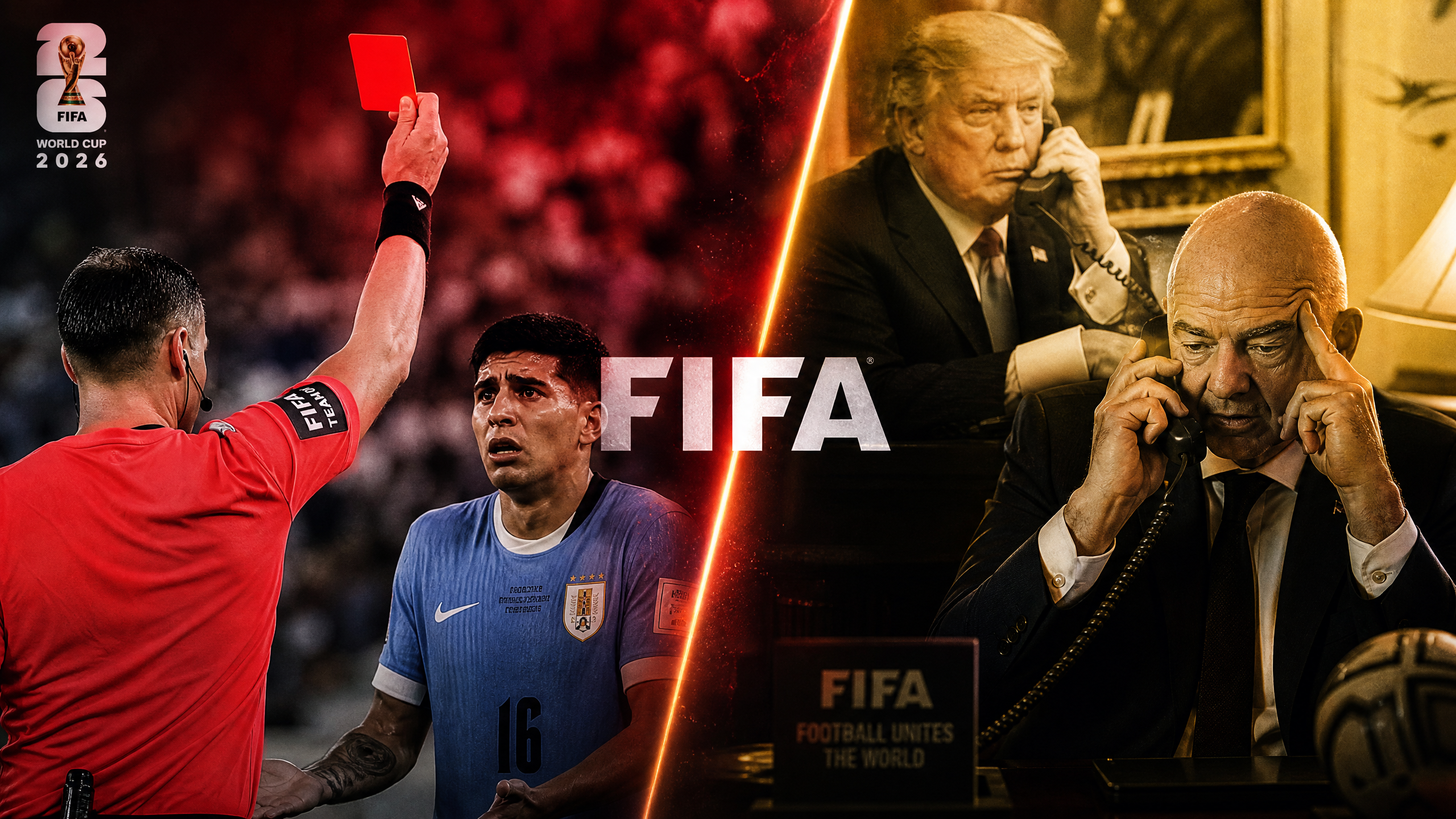
The Balogun Red Card Saga: How a Suspension Became a Political Flashpoint

In the 2026 World Cup narrative, one banner headline has emerged louder than any match report: a red card and a phone call that altered a disciplinary decision. Folarin Balogun, who had been sent off in the Group stage clash with Bosnia, appeared on the verge of a match ban—until a direct line to FIFA chief Gianni Infantino from a powerful political figure opened a new chapter. Sources confirm that FIFA suspended Balogun’s automatic red-card ban after the call, a move that immediately drew questions about referee discipline, governance, and the independence of football’s rules.
Unpacking the sequence: Bosnia, Belgium, and the suspension
- Balogun’s red card occurred in the Bosnia game, triggering an automatic ban under FIFA rules.
- Ahead of the Belgium fixture, Balogun was cleared to play, a decision described by many observers as extraordinary given the standard disciplinary framework.
- The intervention—publicly linked to a call from the U.S. president to Infantino—prompted protests from UEFA and Belgium’s FA, who argued that the decision undermined the integrity of match officiating and disciplinary processes.
The episode has intensified scrutiny of how political actors might influence football governance. Critics warn that perceived outside pressure can erode faith in fair play and consistency in sanctioning players across the tournament.
The Argentina-Egypt Round of 16 Row: Egypt’s “VAR scandal” Allegation
Separately, a confrontation off the field has intensified tensions around fairness standards in the World Cup. Egypt publicly accused FIFA of preferential treatment toward Argentina in their Round of 16 matchup, labeling the decisions in the game a “VAR scandal.” The claim centers on key decisions during the match that Egypt contends favored the South American powerhouse, prompting calls for a transparent review of VAR governance and its application in crucial knockout-stage fixtures.
Why Egypt’s accusation matters for the integrity narrative
- The allegation centers on the perception that video assistant referee (VAR) outcomes were skewed in favor of one nation during a high-stakes game.
- Fans and national associations are increasingly demanding independent VAR oversight and clearer, publicly documented criteria for overturns and on-field calls.
- Across social media and traditional media, debates about consistency, transparency, and accountability in VAR usage have surged, threatening to overshadow on-pitch drama with governance concerns.
The Inaugural FIFA Peace Prize: Infantino’s Controversial Move
Adding another layer to the controversy, Infantino reportedly awarded the inaugural FIFA Peace Prize to Donald Trump, bypassing his own 37-member council. This act has sparked debate about governance structure and the balance of influence within FIFA’s decision-making apparatus. Critics argue that bypassing the council risks concentrating power and diminishing the checks-and-balances that are supposed to monitor ethics and governance in international football.
What the prize signal means for FIFA’s legitimacy
- The Peace Prize event is seen by supporters as a bold gesture toward sport diplomacy; opponents view it as politicization that could undermine a neutral, football-focused image.
- Bypassing the 37-member council raises concerns about procedural transparency and whether the correct channels are being respected for major awards and endorsements.
- In the broader debate, the prize underscores the ongoing tension between sport, politics, and global diplomacy at the World Cup stage.
Taken together, these developments cast a long shadow over FIFA’s stewardship of the world game. The Balogun suspension episode, the Egypt-Argentina VAR dispute, and the Peace Prize decision converge on a central question: how can the sport maintain trust when governance, decision-making, and perceived political influence intersect so prominently with competition?
Proponents of reform argue for clearer, independently verifiable processes—strict adherence to disciplinary codes, transparent VAR protocols, and governance frameworks that safeguard neutrality from political interference. Critics, meanwhile, warn that without decisive reforms, the World Cup risks being remembered more for controversy than celebration, and for undermining the very ideals of fair play that define football.
As the 2026 World Cup continues to captivate global audiences with its on-field drama, these off-field controversies demand equal attention. The Balogun case, the Egypt-Argentina VAR debate, and the Peace Prize episode together chart a critical moment for FIFA: a crossroads where accountability, transparency, and governance must be strengthened to protect the sport’s integrity. For fans, teams, and nations alike, the path forward is clear—reaffirm the rules, restore trust, and ensure that football’s most prestigious stage remains a true arena for merit, not political leverage.
Subscribe to Our Newsletter
Get the latest articles on Tech, Finance & more delivered to your inbox. No spam, ever.
We respect your privacy. Unsubscribe anytime.




About the Author
World Daily Editorial Team
The World Daily Editorial Team covers global news, travel, technology, finance, and health. Our writers research and curate the most relevant stories from around the world to keep you informed and inspired.